
When the Serpent Bites Its Tale.
The paradox of serpent symbolism across civilizations.

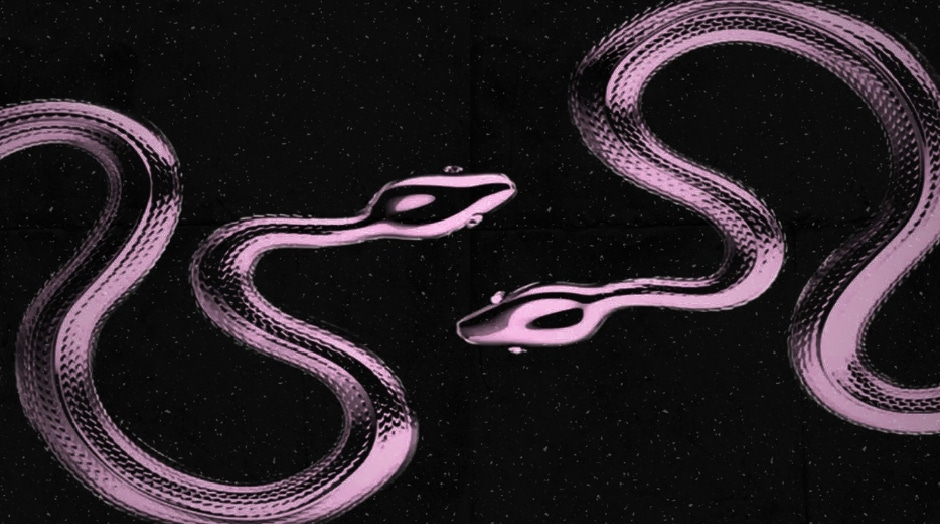
Whether it is the Rod of Asclepius, the Ouroboros, or the Edenic treachery, the serpent has occupied an oddly paradoxical role across countless civilizations. Although often deemed a symbol of venom and perfidy, the serpent is also chosen as the emblem of medicine, embodying the Arabic proverb “لكل داء دواء” (to every disease there is a cure). It is proof that the very poison capable of killing also holds the power to heal, that the same tongue that shoots venom coursing through your veins can also be the one you seek for salvation.
This duality is far from accidental; it reflects how humans interpret danger, morality, and protection through the symbols they create, including what meanings they choose to attribute to them.
The Greeks imagined The Ouroboros (the serpent biting its own tail) representing the cyclical nature of existence. Its sloughing skin symbolized the transmigration of souls and renewal. Similarly, Mesopotamian texts associate the same reptile with wisdom and rejuvenation.
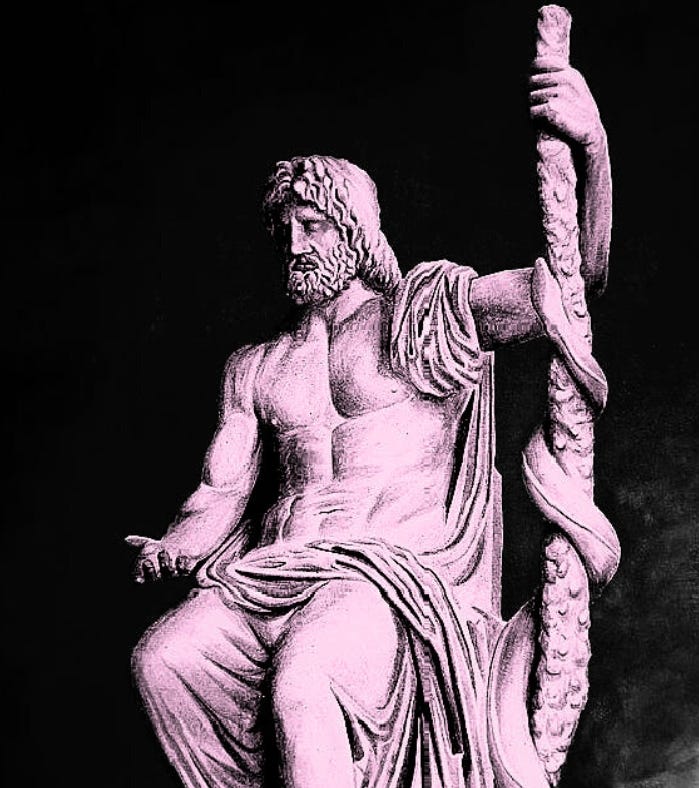
The Rod of Asclepius, linked to the Greek god of healing and medicinal arts, corroborates that poison and medicine often differ only by dosage: the viper’s venom, when purified, becomes antiserum.
“Asclepius derived his name from healing and from deferring the withering that comes with death. For this reason, a serpent is given as his attribute, indicating that those who avail themselves of medical science undergo a process similar to the serpent, growing young again after illness and sloughing off old age.”
Cornutus—Theologiae Graecae Compendium
This paradox was already embedded in Ancient Greek through the word “φάρμακον” (pharmakon), which meant both poison and remedy—implying that meaning, like medicine, resides essentially on context rather than essence.
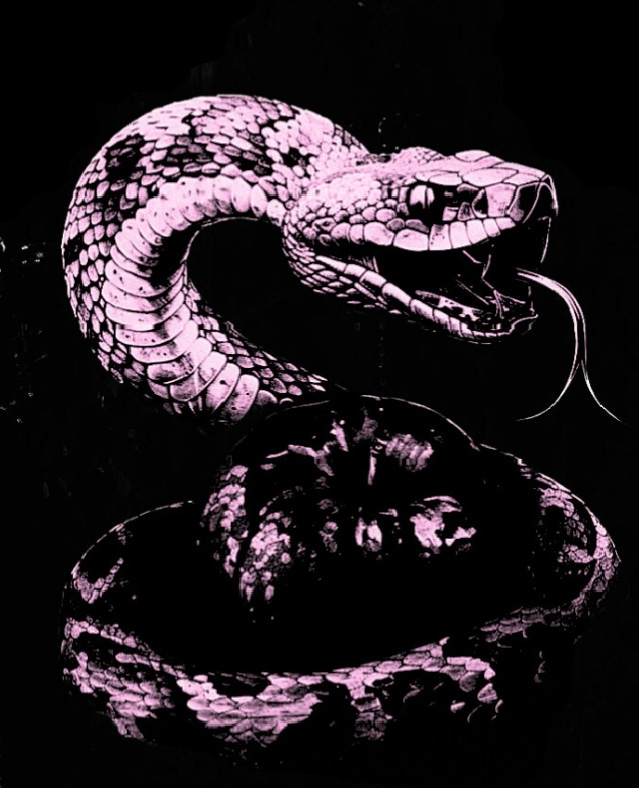
And yet, ambiguity persists. Human speech often uses serpent imagery to address sharpness. Expressions such as “venomous words” or “snake-tongued” uncover a lurking cultural discomfort with directness. Yet a viper does not bite without provocation; biologically, its venom is defensive rather than aggressive. It strikes only when stepped on—a principle relevant in social boundaries as well.
The Ouroboros, traditionally interpreted as self-sabotage, was originally a symbol of continuity, self-renewal, and the convergence of beginning and end. Swimming in the lake of remorse where one once drowned can be deemed despair, yet it may equally signify courage, a mark of growth, and a testament to learning how to swim and avoid drowning again. Therefore, cultures may differ in their interpretations, but the symbols themselves remain indifferent.
Perhaps the paradoxical dichotomy of the serpent’s symbolism attests to a larger truth: duality shapes the universe. Sweetness drowns bees, water erodes stones, and even truths, though longed for, can sting.
Symbols, like language, evolve according to what a society fears, values, or misunderstands. Understanding the way we interpret symbols is inseparable from understanding how language shapes thought and art.
This essay offers a broader look at that dynamic, especially in how language contributes to the shaping of identity.
And perhaps that is why the symbol continues to live among us, omnipresent across cultures; because what if evil were nothing but the paradigm of everything we struggle to reconcile within ourselves?
The same hand trembling at the serpent’s encounter is the one cradling it, seeking healing from its venom. Often the same hand that dares to trace the curve of its parietal scales in a reluctant attempt at reconciliation.
That’s when the serpent, deprived of its venom, learns that survival—trough a twisted, distorted lens—becomes its own form of birthed love.
© 2025 ashndust. All rights reserved.
"Yet a viper does not bite without provocation; biologically, its venom is defensive rather than aggressive. It strikes only when stepped on..." This was the one quote that stuck with me throughout reading this piece (though the entirety was greatly written, well done) as I see to it that the biology of the viper's venom and the precursor to its fearful bite may actually give us a much less erroneous and far more profound symbolism when referring to the viper in any form of speech or writing.
All in all, this was a profoundly insightful piece overall, very well done.
"The same hand trembling at the serpent’s encounter is the one cradling it, seeking healing from its venom." just hits different! An absolute masterpiece of writing! LOVE IT ❤️👌
Keep it up!!!!